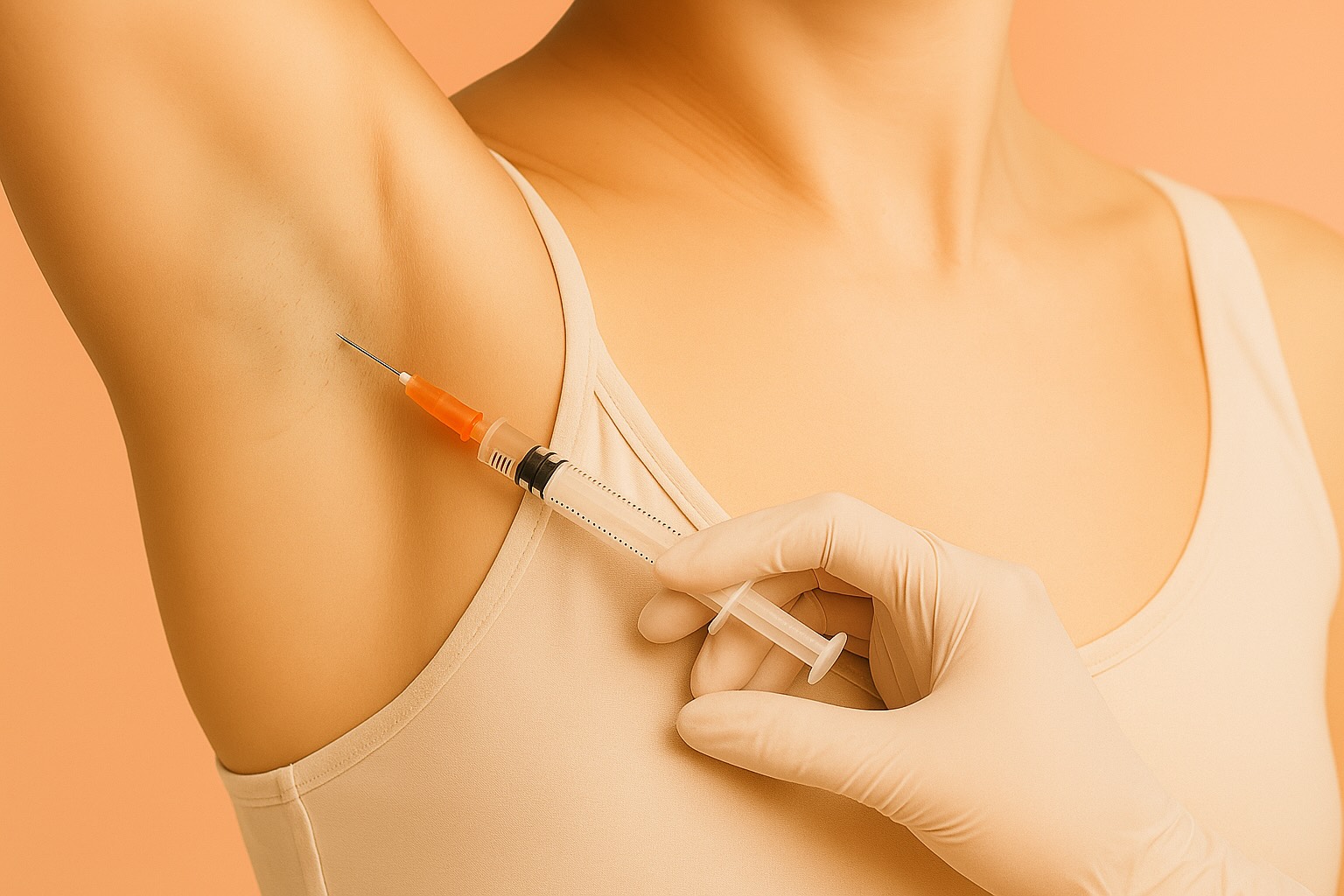
Sweating is vital: it cools the body. In some people, however, the sweat glands produce much more sweat than would be necessary – even at rest, at cool temperatures and without exertion. Specialists then speak of hyperhidrosis. Usually the armpits, hands, feet or forehead are affected.
Treatment at Alpha Skin: Botox® for sweating in Bonn – price from €350 and appointment
For many this is more than annoying. Wet marks on clothing, damp hands when greeting someone or slipping shoes affect work and private life. The good news: there are several routes of treatment, and one of them is botulinum toxin.
Where heavy sweating comes from
Most common is so-called primary hyperhidrosis. It often begins in adolescence or young adulthood, occurs on both sides in particular places and often runs in the family. No illness is behind it; the sweat glands are simply stimulated more strongly.
More rarely, heavy sweating is the result of another cause, such as an overactive thyroid, diabetes, infections, the menopause or medication. If you suddenly sweat all over the body, especially at night, this should be clarified medically.
The stepwise plan of treatment
- Antiperspirants with aluminium salts: Applied to dry skin in the evening, they narrow the outlets of the sweat glands. In mild cases this is often enough.
- Tap water iontophoresis: Hands or feet are placed regularly in water baths with a weak current. This helps many people, but requires patience and regular use.
- Botulinum toxin: If these measures are not enough, treatment with botulinum toxin comes into question.
- Tablets or surgery: Medication against sweating acts throughout the body and has corresponding side effects. Surgery remains the last option.
How botulinum toxin works against sweating
Sweat glands are stimulated via nerves. Botulinum toxin, known under the brand name Botox®, interrupts these signals at the place where it is injected. The glands there produce clearly less sweat for several months. The body's temperature regulation is preserved because the remaining sweat glands continue to work.
One product is expressly approved for heavy sweating of the armpits. On the hands, feet or forehead the treatment is carried out outside the approval ("off-label"); the physician explains this beforehand.
The procedure
- Conversation and examination: The physician clarifies whether primary hyperhidrosis is present and which treatments you have already tried.
- Sweat test: An iodine-starch test makes visible exactly where the strongest sweat production is.
- Treatment: With a very fine needle the agent is injected just under the skin in a grid, on the armpits usually at 15 to 20 points per side.
The treatment of the armpits takes about 30 minutes. Afterwards you can go about your day; on the day of treatment you should avoid sport and sauna.
When the effect sets in and how long it lasts
Sweat production usually decreases after two to seven days, the full effect shows after about two weeks. On the armpits it often lasts four to nine months, sometimes longer; on the hands it is often shorter. After that the treatment can be repeated.
Sweating on hands and feet
On hands and feet the skin is thicker and the injections are more sensitive than on the armpits. That is why the area is often cooled or locally anaesthetised beforehand. The effect on the hands usually lasts somewhat shorter than on the armpits. For sweaty feet, tap water iontophoresis is often tried first because it can be used at home.
Side effects
The injections are briefly uncomfortable, small bruises are possible. On the hands the strength in the fingers can decrease slightly for a few weeks; anyone who does fine motor work should take that into account when planning. Some notice that they sweat somewhat more in other parts of the body. Allergic reactions are rare.
When treatment is not carried out
Treatment is not carried out during pregnancy and breastfeeding, in diseases of the nerve-muscle transmission such as myasthenia gravis and in cases of inflammation in the treatment area. Certain antibiotics can strengthen the effect; therefore name all medication you take.
Frequently asked questions
Is it bad if the armpits no longer sweat at all? No. The armpits make up only a small part of the sweat glands; the body continues to cool itself via the remaining skin.
Can I use normal deodorant afterwards? Yes, from the following day.
Does health insurance pay? Statutory health insurers do not usually cover the cost. Private insurers contribute in some cases; clarify this beforehand with your insurer.
How often does the treatment have to be repeated? Usually once or twice a year. Many notice themselves when the effect wears off and then arrange the next appointment.
Does the treatment also help against odour? Less sweat usually also means less odour, because bacteria find less food on dry skin.
Can I work straight after the treatment? Yes. Small weals at the injection sites usually disappear within an hour. You should avoid tight, chafing clothing on the first day.
Do I have to observe anything beforehand? Shave the armpits one to two days beforehand and do not use deodorant on the day of treatment, so that the sweat test is meaningful.
Cost
Treatment of both armpits starts at Alpha Skin from €350. The price follows the German medical fee schedule (GOÄ) and the size of the treated area. Procedure, prices and appointments are on the page Anti-sweat treatment with botulinum toxin. General information on the active substance is explained in the article 10 things you should know about Botox®. The practice is located at Theaterplatz 1b in Bonn-Bad Godesberg.
Important medical note
The information described is for general education and does not replace personal medical advice, examination or consultation. Whether a treatment is suitable depends on skin type, initial findings, pre-existing conditions, medication and individual goals.
Effect, durability, tolerability and possible side effects can vary from person to person. Specific results or a particular time course cannot be guaranteed.